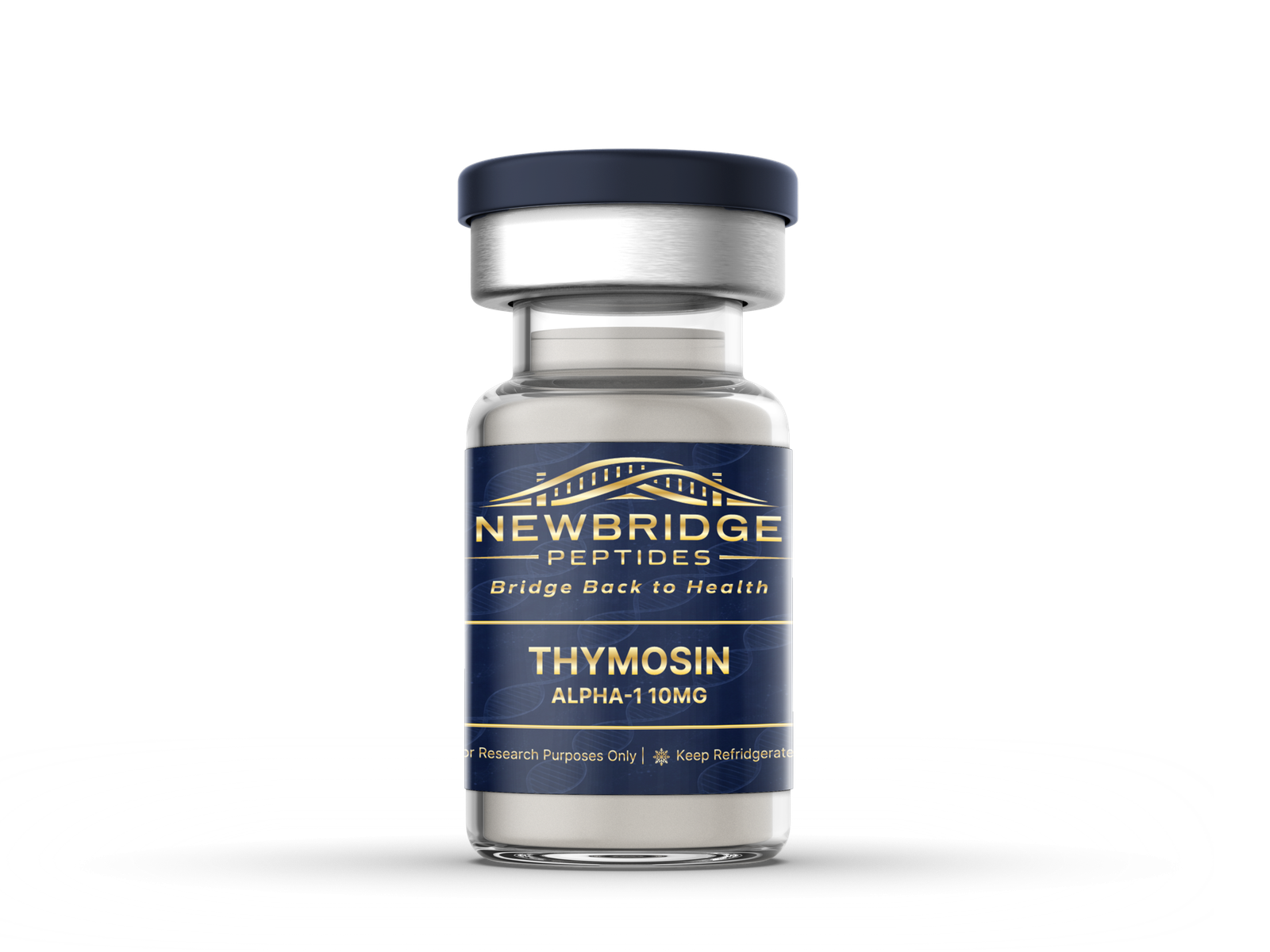
Thymosin Alpha-1 (Tα1) is a naturally derived thymic peptide studied extensively in advanced research environments for its role in immune system regulation, T-cell activation, and adaptive immune response signaling. As a
key peptide produced by the thymus, it plays a central role in coordinating immune defense mechanisms and maintaining immune system balance.
Mechanism of Action
Thymosin Alpha-1 functions as an immunomodulatory signaling peptide that interacts with immune cells to regulate both innate and adaptive immune responses. Research suggests it influences:
- T-cell maturation and differentiation → supports development of functional immune cells
- Cytokine signaling pathways → modulates communication between immune cells
- Dendritic cell activation → enhances antigen presentation and immune recognition
- Toll-like receptor (TLR) pathways → supports early immune response signaling
This multi-level activity allows researchers to explore how immune systems coordinate defense, recognition, and response under various conditions.
Immune System Modulation & T-Cell Activity
Thymosin Alpha-1 is widely studied for its role in enhancing immune cell function and regulation. In controlled research models, it has demonstrated relevance in:
- Supporting activation and proliferation of T-lymphocytes • Enhancing immune system responsiveness to external challenges • Promoting balanced immune activity without overstimulation • Improving coordination between different immune cell populations
This makes it highly valuable in studies focused on immune efficiency and system-wide regulation.
Cytokine Regulation & Inflammatory Balance
A key area of research for Thymosin Alpha-1 is its influence on cytokine signaling—the communication network that governs immune responses. Research has explored its role in:
- Modulating pro-inflammatory and anti-inflammatory cytokine activity • Supporting balanced immune signaling pathways
- Reducing dysregulated inflammatory responses in research models • Enhancing immune system adaptability under stress conditions
Adaptive Immunity & Host Defense Research
Thymosin Alpha-1 plays a critical role in adaptive immunity, where the body develops targeted responses to specific challenges. It is frequently studied for its ability to:
- Enhance antigen recognition and immune memory pathways • Support coordinated immune defense responses
- Improve resilience of the immune system under stress or challenge • Strengthen overall host defense signaling
Systemic Immune Coordination
Beyond individual immune pathways, Thymosin Alpha-1 is studied for its ability to regulate the immune system as a whole. Research models have explored its role in:
- Integrating innate and adaptive immune responses
- Supporting immune system communication across multiple pathways • Enhancing systemic immune resilience and efficiency
- Maintaining immune homeostasis over time
Key Research Focus Areas:
- T-cell activation and differentiation pathways
- Cytokine signaling and inflammatory balance
- Adaptive immune response and antigen recognition
- Host defense and immune resilience models
- Systemic immune regulation and coordination
Quality & Compliance:
- ≥99% purity (HPLC & Mass Spectrometry verified)
- Internationally manufactured and independently laboratory tested in the USA
- Third-party tested by independent U.S. laboratories
- Sterile, lyophilized, multidose vial
- Produced to strict research-grade standards for consistency and reliability