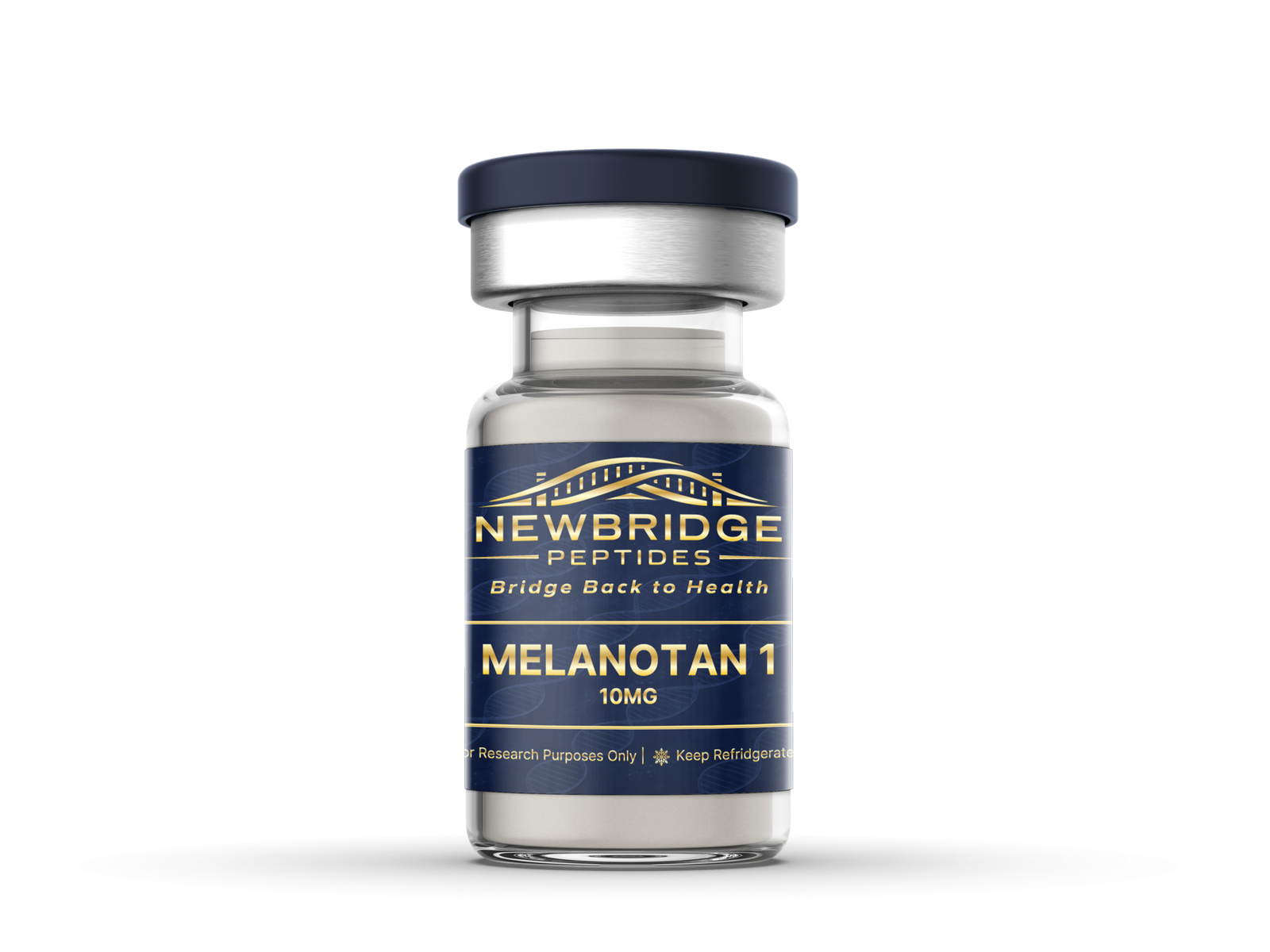
Melanotan 1 (Afamelanotide) is a synthetic analog of alpha-melanocyte stimulating hormone (α-MSH), studied in advanced research environments for its role in melanin production, photoprotection, and melanocortin receptor signaling pathways. It is engineered to selectively activate melanocortin receptors associated with pigmentation and skin-related biological processes.
Mechanism of Action
Melanotan 1 is studied for its ability to stimulate melanocyte activity and regulate pigmentation pathways. Research suggests it influences:
- Melanocortin receptor activation (MC1R) → drives melanin synthesis in melanocytes
- Melanin production signaling → increases eumelanin levels within the skin
- UV response pathways → enhances natural photoprotective mechanisms • Oxidative stress defense → supports cellular protection against environmental stressors
This mechanism allows researchers to investigate how increased pigmentation may contribute to enhanced skin resilience and protection.
Melanin Production & Pigmentation Research
Melanotan 1 is widely studied for its role in regulating melanin synthesis. In controlled research models, it has demonstrated relevance in:
- Stimulating melanocyte activity and melanin production
- Increasing pigmentation through controlled biological pathways • Supporting eumelanin-rich pigmentation models
- Enhancing uniformity and stability of pigmentation signaling
Photoprotection & UV Response
A key area of Melanotan 1 research is its influence on photoprotection. Research has explored its ability to:
- Enhance resistance to ultraviolet (UV) exposure
- Support natural defense mechanisms against UV-induced damage • Reduce oxidative stress associated with environmental exposure • Improve skin resilience under photobiological stress conditions
Oxidative Stress & Cellular Protection
Melanotan 1 is also studied for its role in protecting skin cells from oxidative damage. Research suggests it may:
- Reduce reactive oxygen species (ROS) generated by UV exposure • Support cellular defense systems in the skin
- Enhance resilience to environmental stressors
- Contribute to overall skin cell stability and protection
Photobiology & Environmental Adaptation
Melanotan 1 provides a valuable framework for studying how the body adapts to environmental stressors. Research models have examined its role in:
- Skin adaptation to sunlight and environmental exposure
- Regulation of pigmentation as a protective response
- Interaction between UV exposure and cellular defense systems • Long-term skin resilience and adaptation pathways
Key Research Focus Areas:
- Melanin production and melanocyte activation
- UV response and photoprotection pathways
- Skin pigmentation and photobiology research
- Oxidative stress and environmental adaptation
- Melanocortin receptor signaling
Quality & Compliance:
- ≥99% purity (HPLC & Mass Spectrometry verified)
- Manufactured in the USA
- Third-party tested by independent U.S. laboratories
- Sterile, lyophilized, multidose vial
- Produced to strict research-grade standards for consistency and reliability