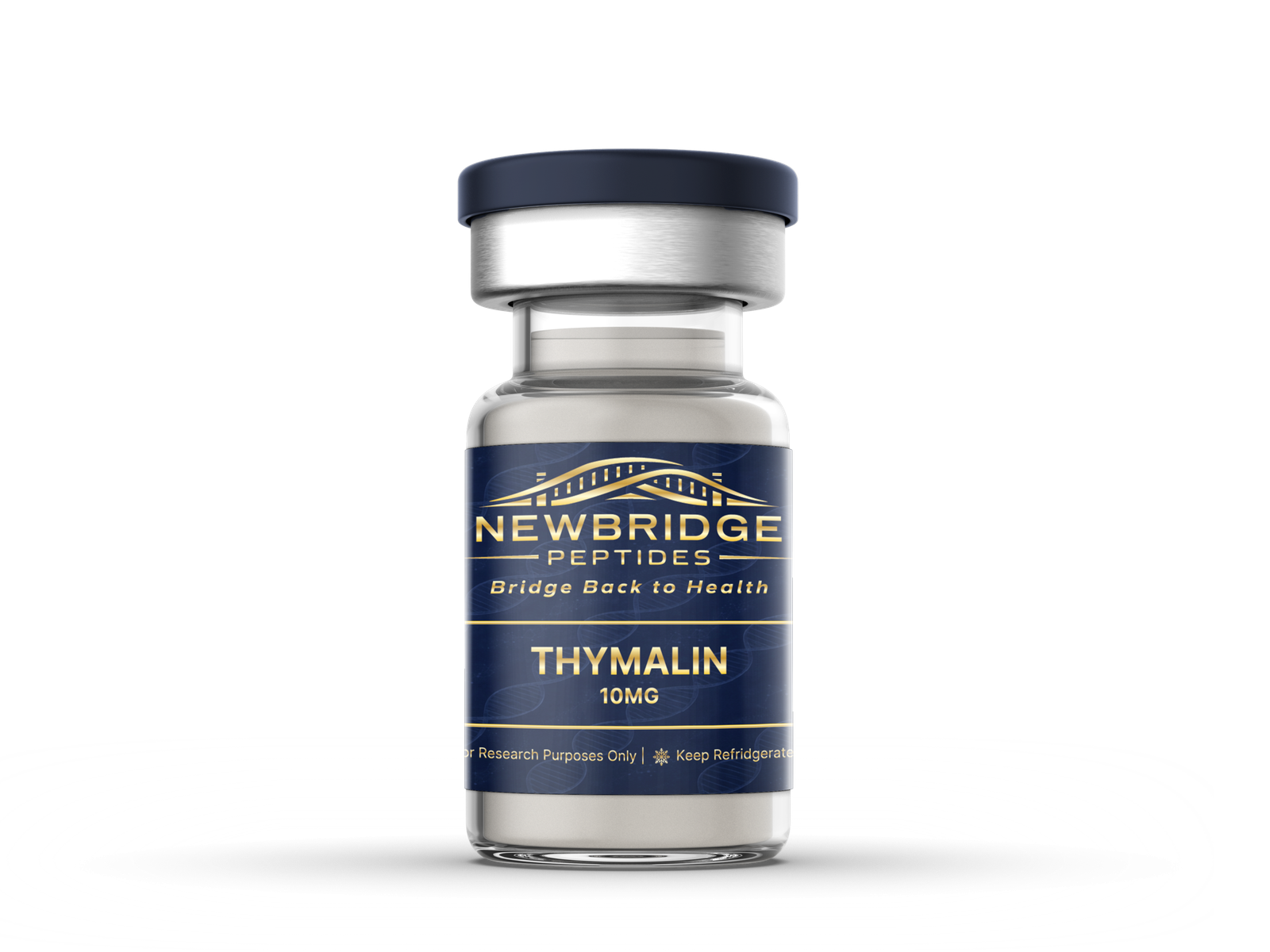
Thymalin is a thymic polypeptide complex derived from thymus tissue, studied in advanced research environments for its role in immune system regulation, cellular differentiation, and hematopoietic signaling pathways. It is associated with supporting immune system coordination and maintaining proper function of immune cell development processes.
Mechanism of Action
Thymalin is studied for its ability to influence immune system signaling at both cellular and genetic levels. Research suggests it interacts with pathways involved in:
- T-cell differentiation and maturation → supports development of functional immune cells
- Gene expression regulation → influences proteins involved in immune response
- Cytokine signaling pathways → modulates communication between immune cells
- Hematopoietic activity → supports formation and development of blood and immune cells
This multi-level activity allows researchers to explore how thymic peptides regulate immune system balance and cellular defense mechanisms.
Immune System Modulation & T-Cell Activity
Thymalin is widely studied for its role in enhancing immune cell function and coordination. In controlled research models, it has demonstrated relevance in:
- Supporting T-lymphocyte development and activation
- Enhancing communication between immune cell populations • Promoting balanced immune responses
- Improving overall immune system efficiency
This makes it a key compound in studies focused on systemic immune optimization.
Cytokine Regulation & Inflammatory Balance
A major area of Thymalin research involves its influence on cytokine signaling—the core communication network of the immune system. Research has explored its ability to:
- Regulate pro-inflammatory and anti-inflammatory cytokines • Maintain balanced immune signaling responses
- Reduce dysregulated inflammatory activity in research models • Support adaptive immune responses under stress conditions
Hematopoietic Function & Cellular Differentiation
Thymalin is also studied for its involvement in hematopoiesis—the formation and development of blood and immune cells. Research suggests it may:
- Support differentiation of immune and precursor cells
- Enhance production of functional immune components
- Promote renewal of cellular populations
- Improve coordination between immune and hematopoietic systems
Immune Aging & Longevity Research
Thymalin is frequently utilized in research models focused on age-related decline in immune function. Studies have explored its potential to:
- Support immune resilience over time
- Improve cellular communication within aging immune systems • Enhance recovery from immune stressors
- Contribute to models of healthy immune aging
Systemic Immune Coordination
Beyond individual pathways, Thymalin is studied for its broader role in coordinating immune system activity. Research models have examined its ability to:
- Integrate multiple immune signaling pathways
- Support systemic defense mechanisms
- Enhance communication between immune and cellular systems • Maintain overall biological balance
Key Research Focus Areas:
- Immune system modulation and T-cell activity
- Cytokine signaling and inflammatory regulation
- Hematopoietic and cellular differentiation pathways
- Immune aging and resilience research
- Systemic defense and biological balance
- Gene expression and immune signaling coordination
Quality & Compliance:
- ≥99% purity (HPLC & Mass Spectrometry verified)
- Internationally manufactured and independently laboratory tested in the USA
- Third-party tested by independent U.S. laboratories
- Sterile, lyophilized, multidose vial
- Produced to strict research-grade standards for consistency and reliability