
Primarily U.S. Manufactured. All Compounds Independently Tested in U.S. Laboratories.

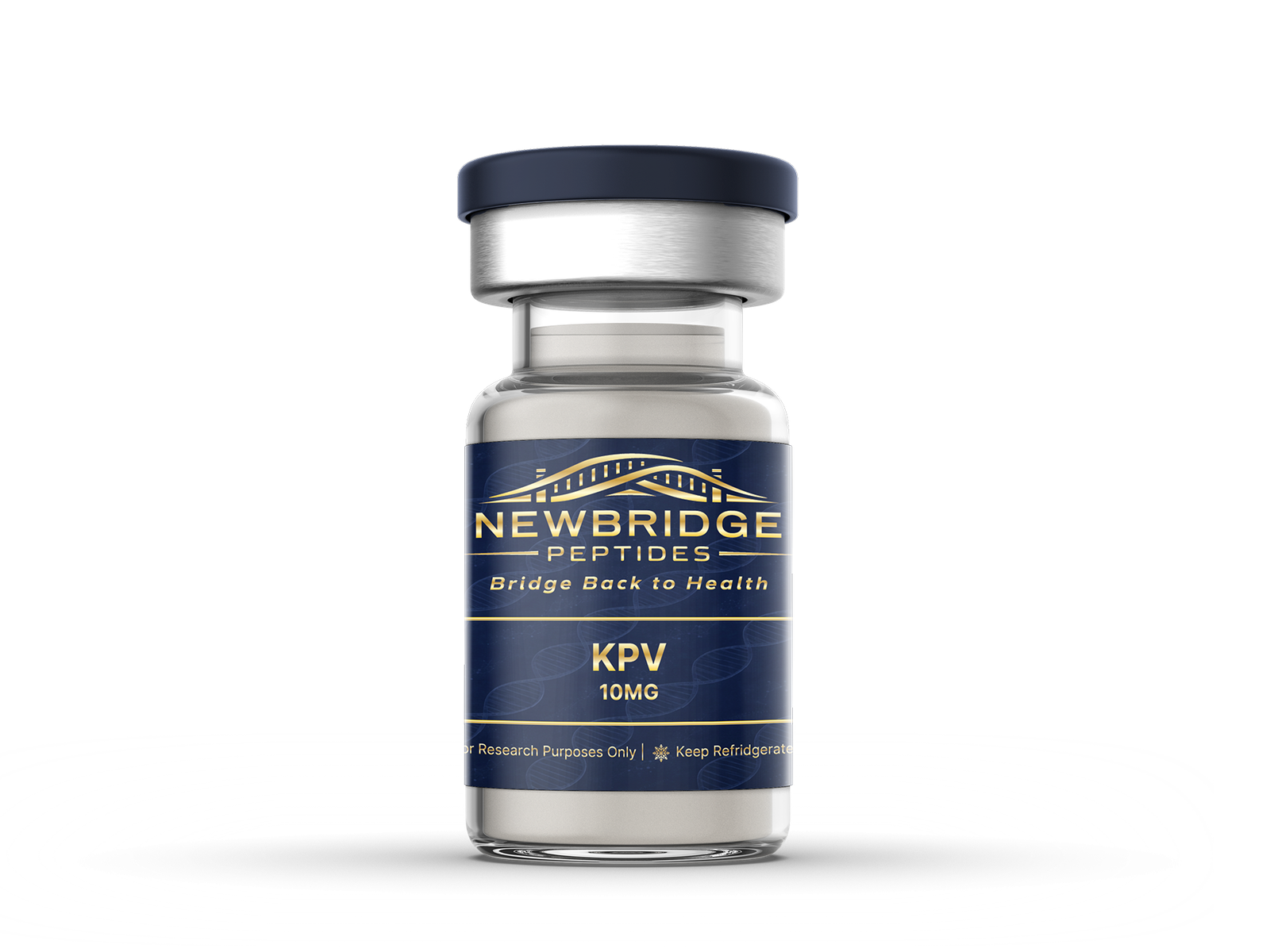
KPV

KPV (Lys-Pro-Val) is a bioactive tripeptide fragment derived from alpha melanocyte-stimulating hormone (α-MSH), studied in advanced research environments for its role in inflammation modulation, immune signaling, and cytokine regulation pathways. Due to its targeted activity, KPV is recognized for its ability to influence inflammatory responses at a cellular level without broadly suppressing immune function.

Mechanism of Action

KPV is studied for its ability to modulate inflammatory signaling by interacting with pathways associated with cytokine production and immune response regulation.

Research suggests it influences:

  • Inhibition of pro-inflammatory cytokines (e.g., TNF-α, IL-6) → reduces inflammatory signaling
  • NF-κB pathway modulation → regulates transcription of inflammation related genes
  • Immune signaling balance → supports controlled immune response without suppression
  • Cellular inflammation control → targets localized inflammatory activity

This mechanism allows researchers to explore how selective peptide signaling can regulate inflammation while preserving normal immune function.

Inflammation Modulation & Cytokine Regulation

KPV is widely studied for its potent anti-inflammatory signaling capabilities. In controlled research models, it has demonstrated relevance in:

  • Reducing excessive inflammatory responses
  • Modulating cytokine activity for balanced signaling
  • Supporting resolution of localized inflammation
  • Enhancing cellular stability under inflammatory stress

These properties make KPV highly valuable in studies focused on inflammation control and immune regulation.

Gut Integrity & Gastrointestinal Research

KPV is frequently explored in research models involving gut health and intestinal integrity. Research suggests it may:

  • Support maintenance of the intestinal barrier
  • Promote mucosal healing and epithelial repair
  • Reduce inflammation within gastrointestinal environments • Enhance resilience of gut tissue under stress conditions

This makes it particularly relevant in studies focused on digestive system function and inflammatory gut pathways.

Skin & Localized Tissue Research

Due to its localized anti-inflammatory effects, KPV is also studied in models involving skin and surface-level tissue repair. Research has explored its role in:

  • Reducing inflammation in dermal environments
  • Supporting skin barrier integrity
  • Enhancing repair signaling in irritated or damaged tissue • Promoting localized healing responses

Immune Modulation & Systemic Balance

KPV is unique in its ability to modulate immune responses without broadly suppressing immune function. It has been studied for its role in:

  • Maintaining balanced immune signaling
  • Supporting appropriate immune response activation
  • Preventing overactive inflammatory reactions
  • Enhancing immune system stability

Systemic & Multi-Tissue Applications

Due to its targeted yet versatile activity, KPV is utilized in research models exploring both localized and systemic inflammation. It has been studied for:

  • Coordinated regulation of inflammation across tissues
  • Support of overall cellular resilience
  • Integration of immune and inflammatory signaling pathways • Enhancement of recovery from inflammatory stress

Key Research Focus Areas:

  • Anti-inflammatory signaling and cytokine regulation
  • Immune system modulation and balance
  • Gut integrity and gastrointestinal pathways
  • Skin inflammation and tissue repair
  • Localized and systemic inflammation control
  • NF-κB pathway and cellular signaling regulation

Quality & Compliance:

  • ≥99% purity (HPLC & Mass Spectrometry verified)
  • Manufactured in the USA
  • Third-party tested by independent U.S. laboratories
  • Sterile, lyophilized, multidose vial
  • Produced to strict research-grade standards for consistency and reliability

Scroll for More >>

Made in USA

A short peptide fragment provided for research environments, produced with standardized processes and supported by quality documentation.

Certificates of Analysis:

$60.00