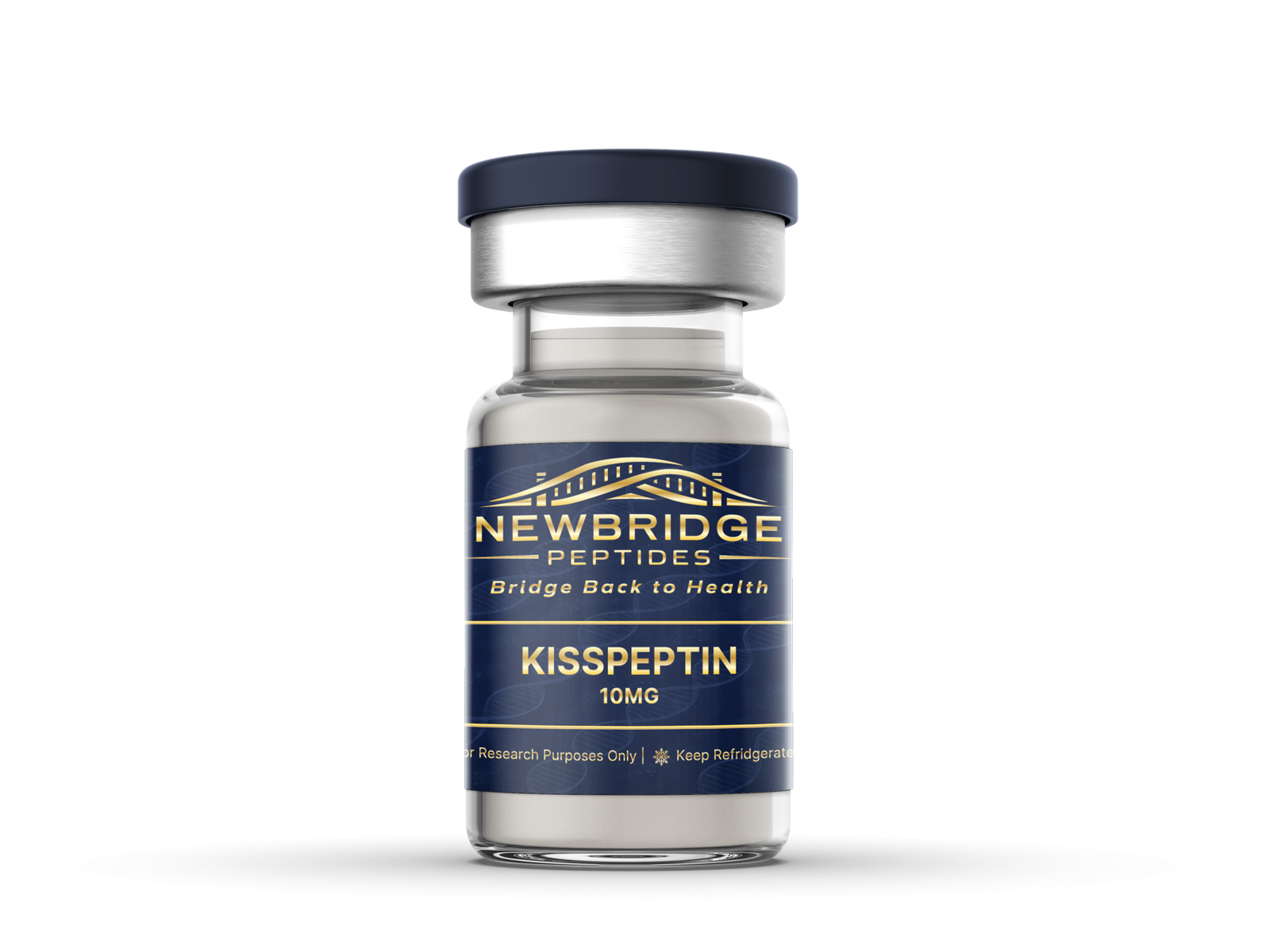
Kisspeptin is a hypothalamic neuropeptide studied in advanced research environments for its central role in regulating the hypothalamic-pituitary gonadal (HPG) axis. As a primary upstream modulator of gonadotropin releasing hormone (GnRH), Kisspeptin serves as a key signaling molecule that initiates and coordinates reproductive hormone cascades and endocrine system communication.
Mechanism of Action
Kisspeptin exerts its effects by binding to the KISS1 receptor (GPR54) on GnRH neurons within the hypothalamus, triggering the release of GnRH and activating downstream hormonal pathways.
Research suggests it influences:
- GnRH neuron activation → initiates reproductive hormone signaling • LH & FSH release → stimulates pituitary-driven endocrine responses • HPG axis coordination → regulates communication between brain and gonadal systems
- Endocrine feedback modulation → maintains hormonal balance and signaling precision
This mechanism allows researchers to explore how upstream neuropeptide signaling governs full-system hormonal output.
HPG Axis & Endocrine Regulation
Kisspeptin is widely studied for its foundational role in controlling the HPG axis. In controlled research models, it has demonstrated relevance in:
- Regulating initiation of reproductive hormone cascades
- Coordinating hypothalamic and pituitary signaling
- Supporting balanced endocrine system communication
- Maintaining proper hormonal feedback loops
This positions Kisspeptin as a cornerstone compound in endocrine system research.
Reproductive Hormone Signaling
Through its influence on GnRH, LH, and FSH, Kisspeptin is central to research involving reproductive hormone pathways. Studies have explored its role in:
- Supporting testosterone-related signaling pathways
- Influencing gonadal hormone production models
- Regulating hormonal rhythms and cyclical signaling
- Enhancing understanding of fertility-related mechanisms
Hormonal Balance & Feedback Systems
A defining feature of Kisspeptin is its ability to regulate hormonal feedback loops, ensuring proper communication between endocrine systems. Research has examined its ability to:
- Maintain equilibrium within hormone signaling pathways • Support adaptive endocrine responses
- Prevent dysregulation of reproductive hormones
- Coordinate long-term hormonal stability
Neuroendocrine Integration
Kisspeptin also plays a broader role in neuroendocrine communication, linking brain signaling with systemic hormonal output. It has been studied for:
- Integration of neurological and endocrine systems
- Regulation of hormone release timing and coordination • Influence on physiological processes tied to reproduction • Contribution to overall hormonal system efficiency
Key Research Focus Areas:
- Hypothalamic-pituitary-gonadal (HPG) axis regulation • GnRH, LH, and FSH signaling pathways
- Testosterone and reproductive hormone research
- Endocrine feedback loop modulation
- Hormonal balance and fertility-related pathways
- Neuroendocrine system integration
Quality & Compliance:
- ≥99% purity (HPLC & Mass Spectrometry verified)
- Manufactured in the USA
- Third-party tested by independent U.S. laboratories
- Sterile, lyophilized, multidose vial
- Produced to strict research-grade standards for consistency and reliability